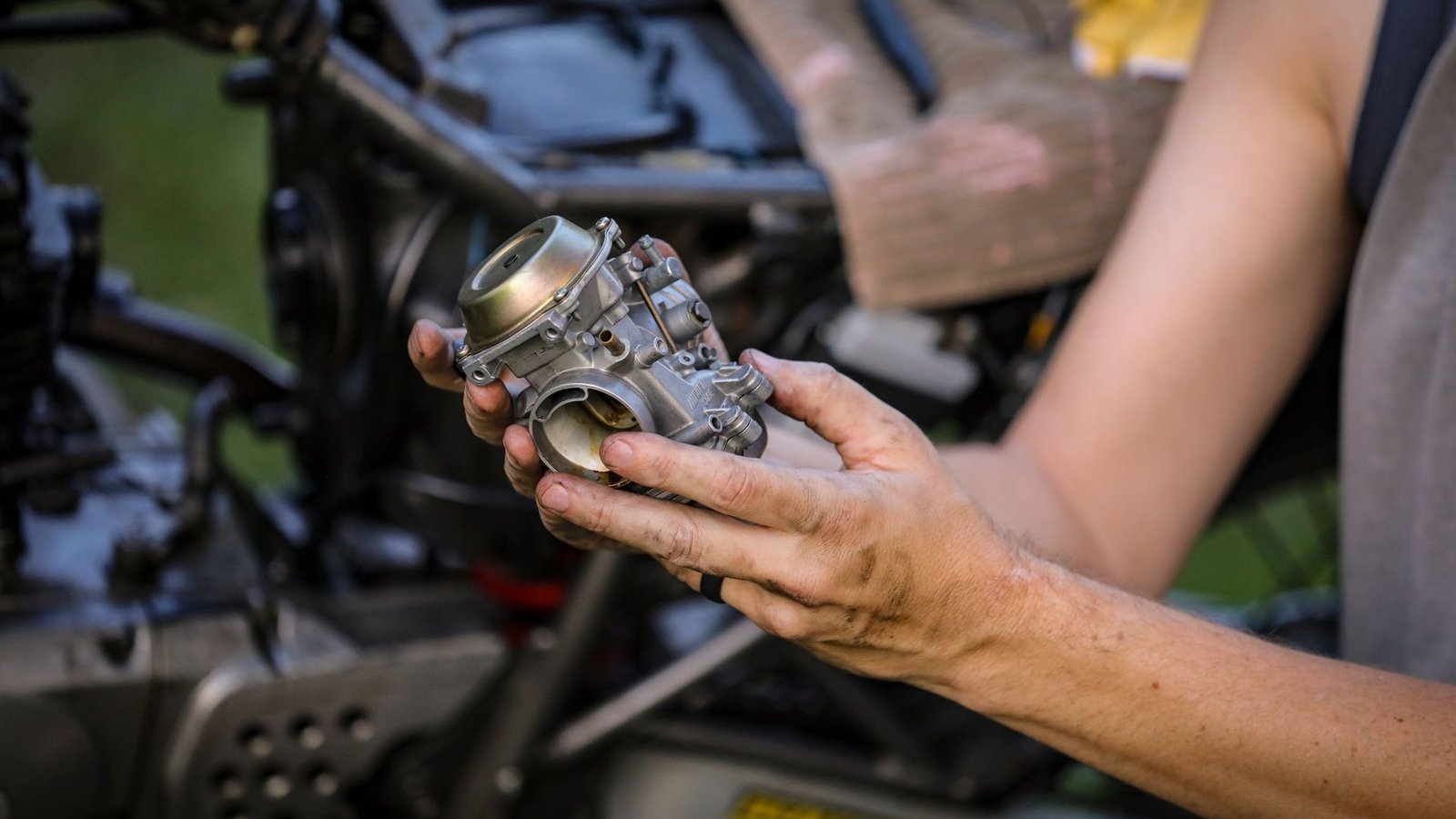
A motorcycle carburetor meters fuel and air into the engine so the engine can burn the mixture. On a motorcycle, you control it with the twist-grip throttle, which connects through a sliding cable. The design dates to the late 19th century and was the most common fuel metering device on motorcycle engines until the 1980s. Here is how it works, what goes wrong with it, and what it means for your riding.
What Is a Motorcycle Carburetor?
A carburetor is a device used by a gasoline internal combustion engine to control and mix the air and fuel entering the engine. Its core job is to mix a precise amount of gasoline with incoming air. Too little fuel and the engine will not run well, and too much will flood it.
The carburetor also acts as an adjustable valve. By controlling how much air flows in, it controls how much power the engine makes.
Fuel is metered through calibrated restrictions called jets. A jet is a replaceable plug with a precisely sized hole that sets how easily fuel flows. Swapping jets is how a carburetor is tuned for different conditions.
How a Motorcycle Carburetor Works
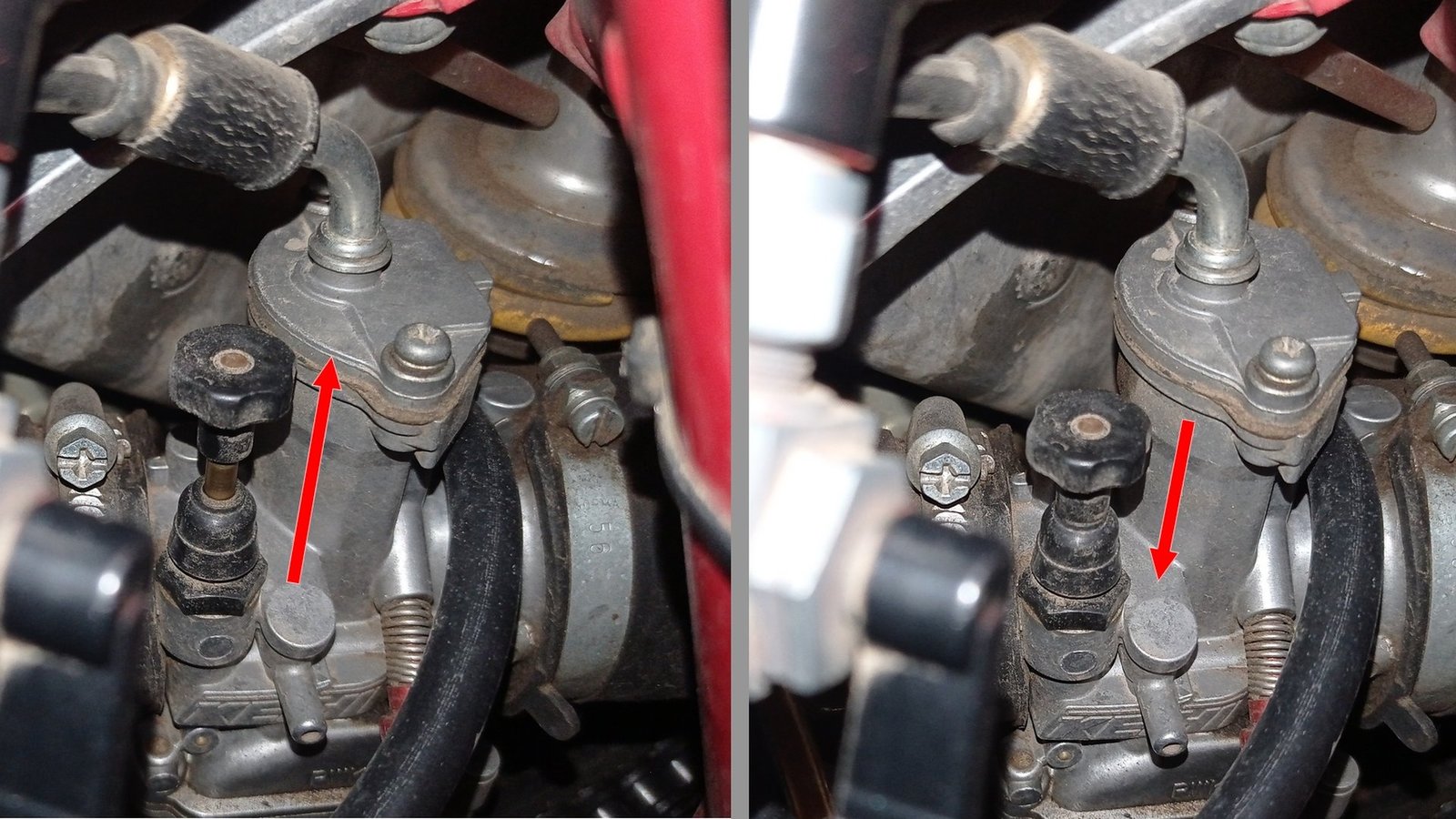
A motorcycle carburetor relies on Bernoulli’s principle. It meters fuel passively. Airflow creates a partial vacuum that lifts fuel from small orifices in the air passage, so the throttle controls air rather than fuel. Pressing the throttle does not directly add fuel.
It speeds the air, and the faster air draws in more fuel.
Air Speed and the Venturi
Air enters through an air cleaner, picks up fuel, and passes through the intake and valves into the combustion chamber. The bore narrows to a venturi, where air speed is highest. Fast air lowers the pressure there, and fuel rises through a venturi tube into the airstream.
The throttle is a mechanism that varies the bore area, which controls airflow and power. Twisting the grip opens a flapper or slide valve, admitting more air and fuel. At greater openings, air speed climbs and draws still more fuel.
Float Bowl and Fuel Level
The float bowl is a fuel reservoir. A floating inlet valve holds the fuel at a constant level. It works much like a toilet tank float valve.
Atmospheric pressure pushes fuel through the jets when intake airflow lowers the pressure in the air passage. With the engine stopped, no fuel flows, because the pressures are equal. Later designs used this bowl to hold the fuel reservoir that gets metered into the airflow.
Idle, Off-Idle, and Main Circuits
At low RPM, the idle circuit meters fuel through a constant idle jet set by the manufacturer. That small jet sits under the throttle and feeds orifices near the closing edge of the slide. The off-idle circuit adds a jet that works briefly as the throttle opens, smoothing the handoff to the main circuit.
Mixture control then passes through four overlapping stages as the slide lifts. In the first quarter or so of slide lift, a lower cutaway makes the mixture richer. From about a quarter to three-quarters throttle, the needle and needle jet control flow. From three-quarters to full throttle, the main jet decides fuel flow.
The accelerator pump is a small piston or diaphragm pump kept full of fuel. It sprays extra fuel in proportion to throttle opening, which prevents a lean stumble. Slide throttles are almost never used in automotive carburetors but are very common on motorcycles.
Cold Starts, Warm-Up, and Common Carburetor Problems
Cold weather makes starting harder. Fuel vaporizes less readily and tends to condense on the intake walls, starving the cylinders. Excess fuel can also flood the engine and keep it from starting.
Choke and Warm-Up
A carburetor enriches a cold mixture with either a choke or a small starting carburetor jetted very rich. The choke is partly closed during warm-up. That restricts airflow at the entrance, raises vacuum, and pulls more fuel through the main jets.
Choke Left On
A choke left closed after warm-up causes an over-rich mixture. The engine runs rough and lacks power. It also increases fuel consumption and exhaust emissions. Open the choke once the engine has warmed up.
Heat, Storage, and Fuel Flow
Fuel boiling and vapor lock can occur in carbureted engines, especially in hotter climates. The float chamber sits close to the engine, which is why heat matters. After a long time out of service, evaporating fuel can leave residue that blocks the idle jets.
Fuel flow can also be blocked by a clogged tank vent, a fuel cap air orifice, or a petcock screen or filter. Older bikes can have intake air leaks that affect idle. If the bike hesitates when you snap the throttle but runs well at steady throttle, fuel is lagging behind the air. Blocked idle jets should be disassembled, cleaned with solvent, and inspected.
Pros and Cons of a Motorcycle Carburetor
A motorcycle carburetor has real strengths and real limits. The table compares it with electronic fuel injection.
| Feature | Carburetor | Electronic fuel injection |
|---|---|---|
| Fuel system pressure | Not pressurized | Constant pressure from a submerged electric pump |
| Cold starts | Needs a choke or starting jet | Starts instantly |
| Weather and elevation | Runs richer or leaner passively | ECU compensates for air density changes |
| Precision | Less precise than injection | Delivers fuel with much more precision |
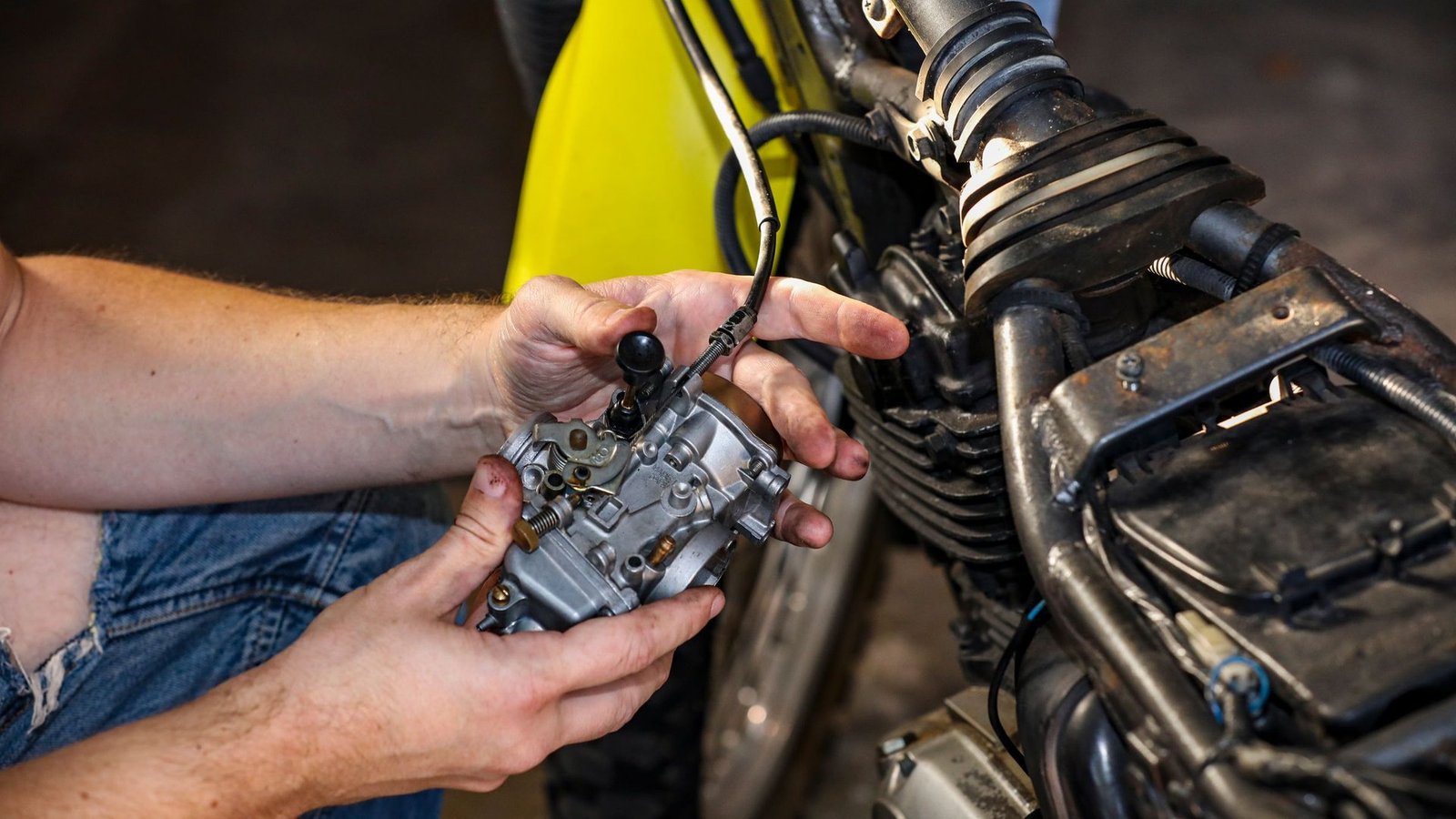
The carburetor’s best feature is its simplicity. You can take it apart, diagnose it, fix it, and reassemble it at the roadside without a laptop. That matters if you ride far from a shop.
Its weak spot is changing conditions. Carburetors do not compensate for temperature and barometric changes. Skip a carbureted bike if you want the engine to adjust itself at altitude, since fuel injection does that automatically.
Tuning takes patience. Jetting is a step-by-step process that starts with idle and then moves to the main jet. Mixture calibration was developed over 100 years of trial and error. Carburetors are not accurate or environmentally friendly, though they did the job for a century.
Where You’ll Find a Motorcycle Carburetor
Carburetors remain on motorcycles, along with some small engines and smaller outboard engines. A multi-cylinder engine often has a carburetor for each cylinder. The basic design stayed essentially unchanged for 80 years.
Harley-Davidson’s Switch to Injection
In 1995 Harley-Davidson first offered electronic fuel injection as an option on the Electra Glide Ultra Classic, replacing the carburetor on its V2 Evolution engine. In 2007, EFI became standard on all Harley-Davidson models, and carburetors were discontinued. For background on the brand, read Harley-Davidson History: How the Brand Got Here.
Honda’s Path
Honda’s PGM-FI was originally developed on road-racing machines and then applied to streetbikes such as the CX500T/CX650T Turbo. Honda marketed the CX500TURBO in 1982 as the first fuel-injected motorcycle in the world.
The 2007 Honda CRF250R uses a 40mm Keihin FCR carburetor. Its flat slide has four rollers, which give very light throttle effort and crisp response. A throttle position sensor helps keep response linear through the range. For 2007, Honda also redesigned the accelerator pump and linkage to improve throttle response.
Older Design History
Downdraft carburetors became common from the late 1930s, especially in the United States, while side draft designs were more common in Europe. Before the late 1950s, drivers operated the choke by hand, and automatic chokes became more common after that.
Motorcycle Carburetor FAQ
What does a carburetor do on a motorcycle?
It mixes fuel and air for the engine and controls how much air flows in, which sets the power. You control it with the throttle, connected by a sliding cable.
Why does my motorcycle run rough after I leave the choke on?
A choke left closed after warm-up makes the mixture too rich. The engine runs rough, lacks power, and burns more fuel. Open the choke as soon as the engine warms up.
Is a carburetor better than fuel injection?
Neither wins in every case. Fuel injection starts instantly and self-adjusts for performance, economy, and emissions. A carburetor is not pressurized, does not compensate for weather or elevation, and can be repaired at the roadside. Your choice depends on where you ride and how much maintenance you want to do yourself.
Why won’t my carbureted motorcycle start when it’s cold?
Cold fuel vaporizes less readily and condenses on the intake walls, starving the cylinders. A choke or starting jet adds the richness the engine needs. Too much fuel can flood the engine, so do not overdo the choke.
Bottom Line
A motorcycle carburetor is a simple, passive way to mix fuel and air. It can be serviced at the roadside, but it has no automatic weather or altitude compensation. Carburetors still appear on motorcycles. If you own one, keep the fuel system clean and learn the choke.
If you are shopping, weigh easy roadside repair against automatic adjustment.
Sources
- Motorcycle Carburetors & Fuel Injection | Harley-Davidson USA
- 2008 Honda Powersports Technology
- 2007 Honda CRF250R- Features & Benefits
- Honda FourTrax Rincon- Programmed Fuel Injection
- Carburetor – Wikipedia
- ELEMENTS OF FUELING | Cycle World | Issue 1
- How Motorcycles W·o·r·k 7 | Cycle World | APRIL 1985
- Analog And Digital | Cycle World | NOVEMBER 2009