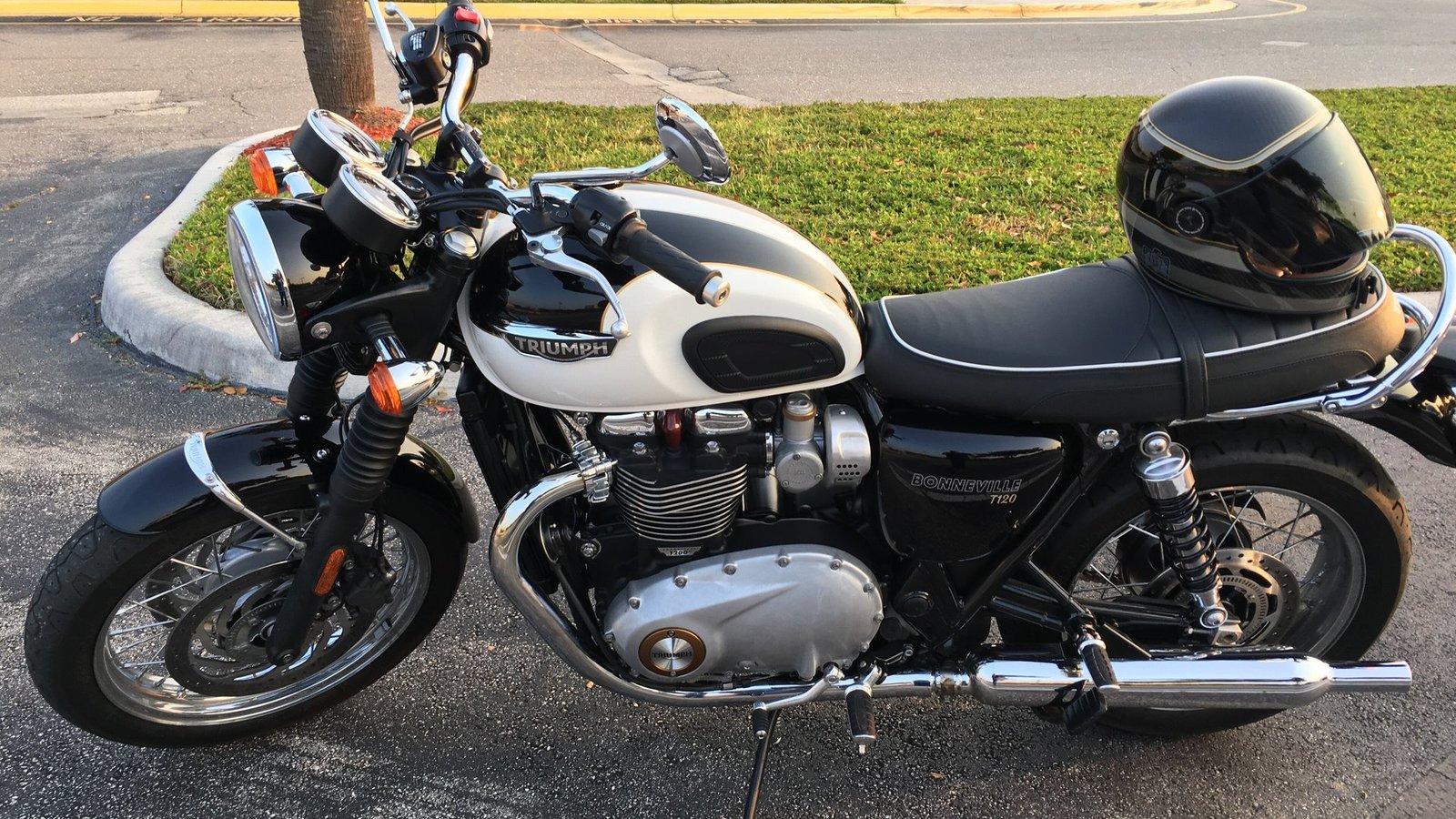
Riders shopping for retro motorcycles to buy usually want three things: classic looks, a fair price and a bike that rides well on real roads. No single model wins all three. The Triumph Bonneville T120 is the strongest all-round pick here, with classic styling and a full set of electronic aids. The Kawasaki W800 and Triumph Street Twin list at $9199 and $9300 for 2020, both under $10,000.
How We Chose
Every model in this group has an MSRP below $10,000, so the list stays focused on value. Ride quality and safety were the other filters. Check for ABS and traction control before you commit, because not every retro bike offers both.
The T120 has lean-sensitive ABS and switchable, lean-sensitive traction control with Road and Rain modes. Those electronics matter most on wet pavement, where grip can change quickly. Riders who want that protection should look for the same features on any bike they consider.
The Harley-Davidson Street 750 has no ABS, even as an option. If you ride in heavy traffic or in rain, that alone may rule it out. The Kawasaki W800 is different: a reviewer states ABS is mandatory on that bike.
Service and warranty matter too. The T120 calls for service every 12 months or 10,000 miles, whichever comes first. Its warranty runs 2 years with unlimited mileage, so you can plan maintenance around a known schedule. If your budget sits lower, see Best Motorcycles Under $8,000 in 2026.
Retro Motorcycles to Buy: Our Picks
Each model below covers its looks, its performance and its trade-offs. Read the skip notes before you decide, because the right bike depends on how you ride.
Triumph Bonneville T120
The T120 is directly descended from the 1959 Bonneville. Triumph’s page describes it as the most faithful recreation of 1960s cool. The styling leans on a deeply sculpted metal fuel tank with coachline detailing, rubber knee pads and metal Triumph tank badges.
The engine is a liquid-cooled parallel twin with 8 valves, SOHC and a 270° firing order. It makes 78.9 HP (58.8 kW) at 6,550 rpm and 105 Nm of torque at 3,500 rpm. That low-rpm pull is useful in town, where you ride most often.
The chassis uses KYB 41 mm cartridge forks at the front and KYB twin rear units with preload adjustment. You can set the rear for a passenger or a loaded bag. Twin 310 mm fixed Brembo discs with 2-piston floating calipers and OCABS handle the stopping.
Cruise control is standard, which helps on long straight stretches. A USB-C port sits on the underside of the instruments. Triumph describes the riding position as comfortable and spacious, with a low seat and a generously padded bench seat.
Ultimate Motorcycling’s Don Williams says the T120 remains one of the most authentic retro motorcycles on the market. Skip it if you want the lightest bike here. Its 513.7 lb wet weight is heavier than the V7 II Stone’s 454 lb.
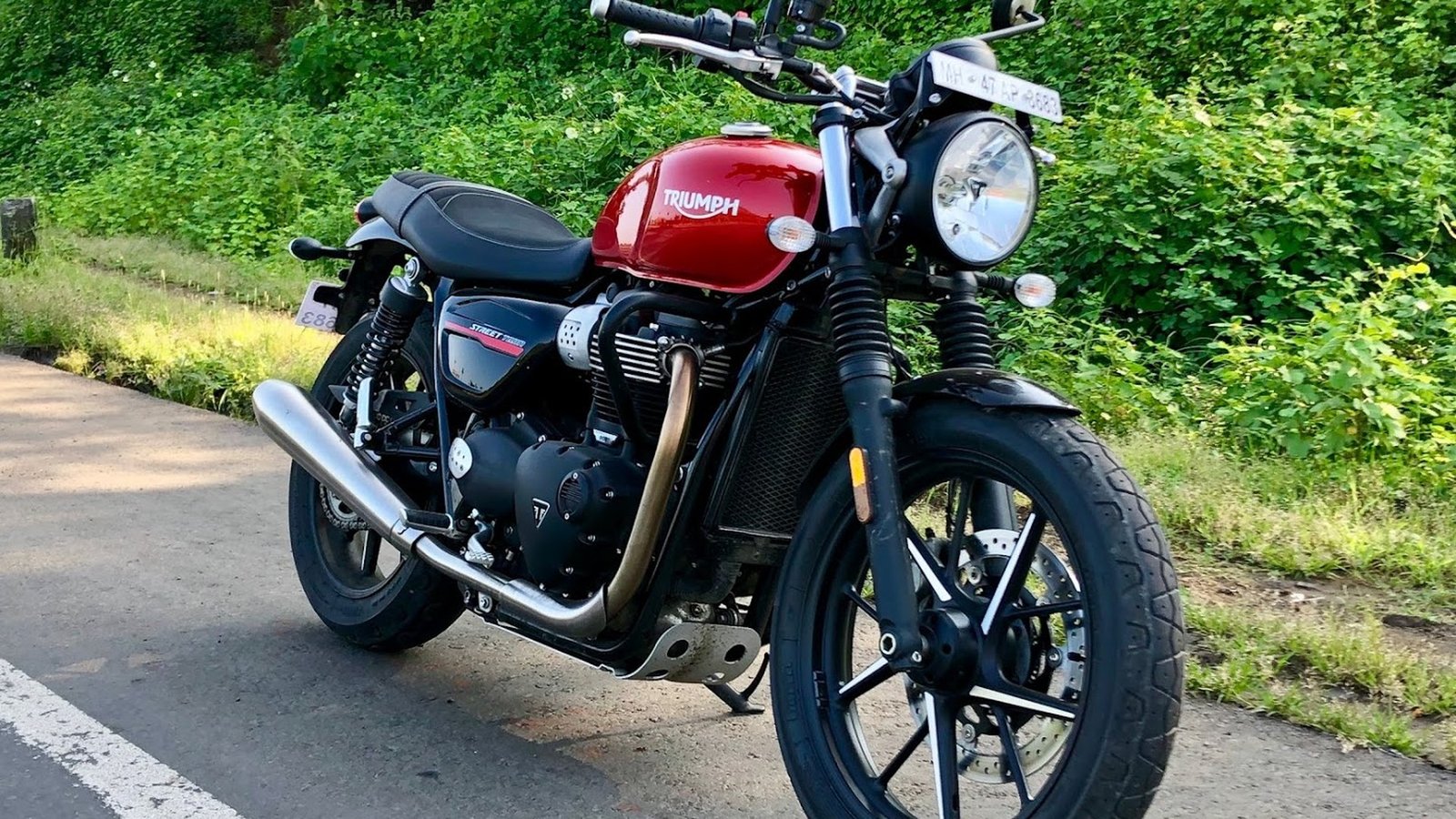
Triumph Street Twin
The Street Twin has a 900cc engine. In the Gaiternational shootout, it made 52.6 hp and 57.8 lb-ft of torque. It weighed 478 lbs in that test.
Reviewers rated it the best of the group for low-speed manners. It also had the best brakes of the three bikes in that comparison. For a rider who spends time in parking lots or slow traffic, those two points carry real weight.
The 2020 MSRP is $9300. Skip it if you want adjustable front suspension. The Street Twin’s suspension has no adjustments other than rear preload.
Kawasaki W800
The W800 lists at $9199 for 2020. It first went on sale from 2011 to 2015, replacing the W650, and returned to the US in 2019 with the current model. Its spirit comes from Kawasaki’s W1, which ran from 1965 to 1974.
The look draws on Kawasaki’s 1960s W models, with air cooling, wire-spoke wheels and peashooter exhausts. A reviewer calls the engine fantastically torquey and says the bike is superb in town and in the canyons. The exhaust note, however, is muffled, and the engine performance was not what that reviewer hoped.
The front brake is a single 320 mm petal-style disc with 2-piston calipers and ABS. The rear is a single 270 mm petal-style disc with a 2-piston caliper and ABS. A reviewer rates the brakes as average and wants more power from the small front caliper.
Ride quality is the weak spot. The bias-ply tires wander on rain-grooved freeways. The front suspension crashes to the bottom of its stroke at the first hint of a pothole. Skip the W800 if your commute includes rain-grooved freeways, and plan for a firmer ride on rough pavement.
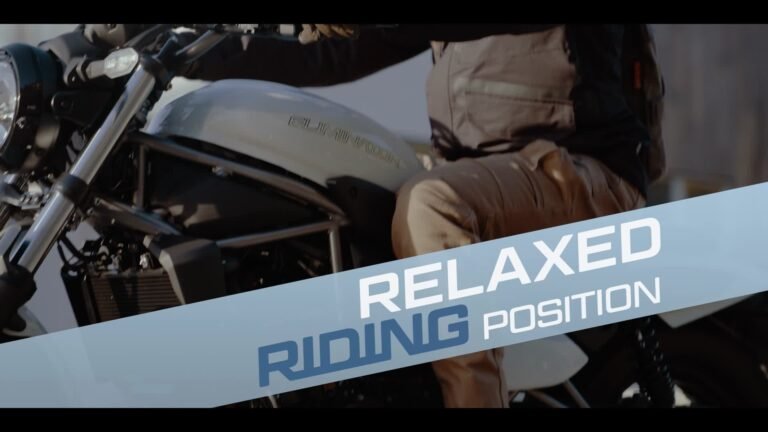
The ride position is uber-relaxed, but the pegs feel about an inch higher than they should be. Riders with long legs may notice that first.
Moto Guzzi V7 II Stone
The V7 II Stone has a 744cc air-cooled, 90° V-twin. In the shootout, it made 41.7 hp and 39.8 lb-ft of torque. It weighed 454 lb soaking wet, the lightest of the three shootout bikes.
Reviewers found it gets up and goes with a pleasurable character, although it is down on power. Its engine is tilted forward 4°, which gives longer-legged riders more knee room. ABS and traction control are both standard.
Skip it if you want strong passing power. The reviewers’ verdict on power is the main reason to look elsewhere.
Ducati Scrambler Icon
The Scrambler Icon recalls the Ducati Scrambler singles of the 1960s. It has bobbed fenders and a sleek fuel tank. The 2020 MSRP is $9595, which is higher than the Street Twin’s $9300 and the W800’s $9199.
Choose it for the look. The bobbed fenders and sleek tank do most of the visual work. If the price difference matters to you, compare it against the rest of this list before you commit.
Yamaha XSR900
The XSR900 is faintly a tribute to the 1976 Yamaha XS750. Its fuel tank paint recalls 1970s and 1980s Yamahas, and the round lighting carries the same retro theme.
The electronics are a strong point. It has ride-by-wire power modes, traction control, ABS and an assist-and-slipper clutch. That gives you a full set of rider aids on a bike with classic styling.
Moto Guzzi V7 III Special
The 2020 MSRP is $8999, the lowest price among the bikes in this section. Its retro cues include wire-spoke wheels, chrome, a brown seat and a round headlight.
It sits below the Street Twin’s $9300 and the W800’s $9199. If you want the classic look at the lowest entry price in this section, the V7 III is a practical choice. Keep in mind that the V7 II Stone’s reviewers found the engine down on power, so compare the two if performance matters to you.
Harley-Davidson Street 750
The Street 750 has a 753cc liquid-cooled, 60° V-twin. In the shootout, it made 54.0 hp and 43.3 lb-ft of torque. It is priced $1,151 below the Street Twin.
Its 27.9 in seat is the lowest seat height listed among the bikes in this section. A low seat helps shorter riders and beginners reach the ground at stops. The 17-inch front and 15-inch rear wheels wear Harley-branded Michelin Scorcher II tires.
The brakes use 300 mm rotors with two 34 mm pistons in single-action Brembo calipers. Reviewers said the updated brakes went from inadequate to quite good for a single-disc setup. The 2016 update added a larger front rotor, an aluminum master cylinder and a relocated brake pedal.
The mid-mount pegs are the furthest forward of the trio, and one reviewer found the position awkward after 45 minutes. Skip the Street 750 if you want ABS, since it is not available even as an option.
Comparison Table
The table below puts the core specs side by side. Use it to match the numbers to your priorities. The Street Twin, Street 750 and V7 II Stone figures come from the same shootout.
| Spec | Triumph Bonneville T120 | Triumph Street Twin | Kawasaki W800 | Moto Guzzi V7 II Stone | Harley-Davidson Street 750 |
|---|---|---|---|---|---|
| Engine | Liquid-cooled parallel twin, 8 valve, SOHC | 900cc | — | 744cc, air-cooled 90° V-twin | 753cc, liquid-cooled 60° V-twin |
| Power | 78.9 HP (58.8 kW) @ 6,550 rpm | 52.6 hp | — | 41.7 hp | 54.0 hp |
| Torque | 105 Nm @ 3,500 rpm | 57.8 lb-ft | — | 39.8 lb-ft | 43.3 lb-ft |
| Weight | 513.7 lb, wet | 478 lbs | 496 lb, Kawasaki claim | 454 lb | 510 lbs |
| Seat height | 31.1 in (790 mm) | — | 31.1 in | — | 27.9 in |
| Fuel capacity | 14.5 L | 3.2 gallons | 4.0 gal | — | — |
| MSRP (2020) | — | $9300 | $9199 | — | — |
The V7 II Stone is the lightest of the three shootout bikes at 454 lb. The Street Twin weighs 478 lbs, and the Street 750 weighs 510 lbs. The T120 makes the most power on this table at 78.9 HP (58.8 kW), but its 513.7 lb wet weight is a lot to handle in tight spaces.
FAQ
Are retro motorcycles reliable and cheap to maintain?
Ownership costs depend on the model. The T120 calls for service every 12 months or 10,000 miles, whichever comes first. Its 2-year warranty comes with unlimited mileage. Check the service interval for the bike you pick, and budget for it from the first day.
Do retro motorcycles come with ABS and traction control?
Some do and some don’t. The T120 has lean-sensitive ABS and switchable traction control. The V7 II Stone has both as standard, and the XSR900 lists both. The Street 750 has no ABS, even as an option.
Which retro motorcycle is best for a beginner?
The Triumph Street Twin is the strongest pick for low-speed control. Reviewers rated it the best in its group for low-speed manners. If you want a lower seat, the Street 750 sits at 27.9 in, but it has no ABS. The T120 has a 31.1 in seat, cruise control and a padded bench seat, which suits a beginner who wants electronics.
Are retro motorcycles good for long highway rides?
It depends on the bike and the road surface. The T120 has standard cruise control, which helps on long straight stretches. The W800’s bias-ply tires wander on rain-grooved freeways, and the V7 II Stone is down on power. One reviewer found the Street 750’s mid-mount pegs awkward after 45 minutes.
Bottom Line
If you want the best all-round mix of retro styling and modern electronics, the Triumph Bonneville T120 is the pick. Ultimate Motorcycling’s Don Williams calls it one of the most authentic retro motorcycles on the market. The T120 also offers cruise control and a full set of braking and traction aids.
For low-speed riding and braking, the Triumph Street Twin earns the nod in its group. At $9300 for 2020, it is a practical choice if you want a classic twin with a manageable feel.
Choose the Kawasaki W800 if you enjoy its torquey engine and ride mostly on back roads. Skip it if your routes include rain-grooved freeways. Skip the Street 750 if ABS is a requirement.