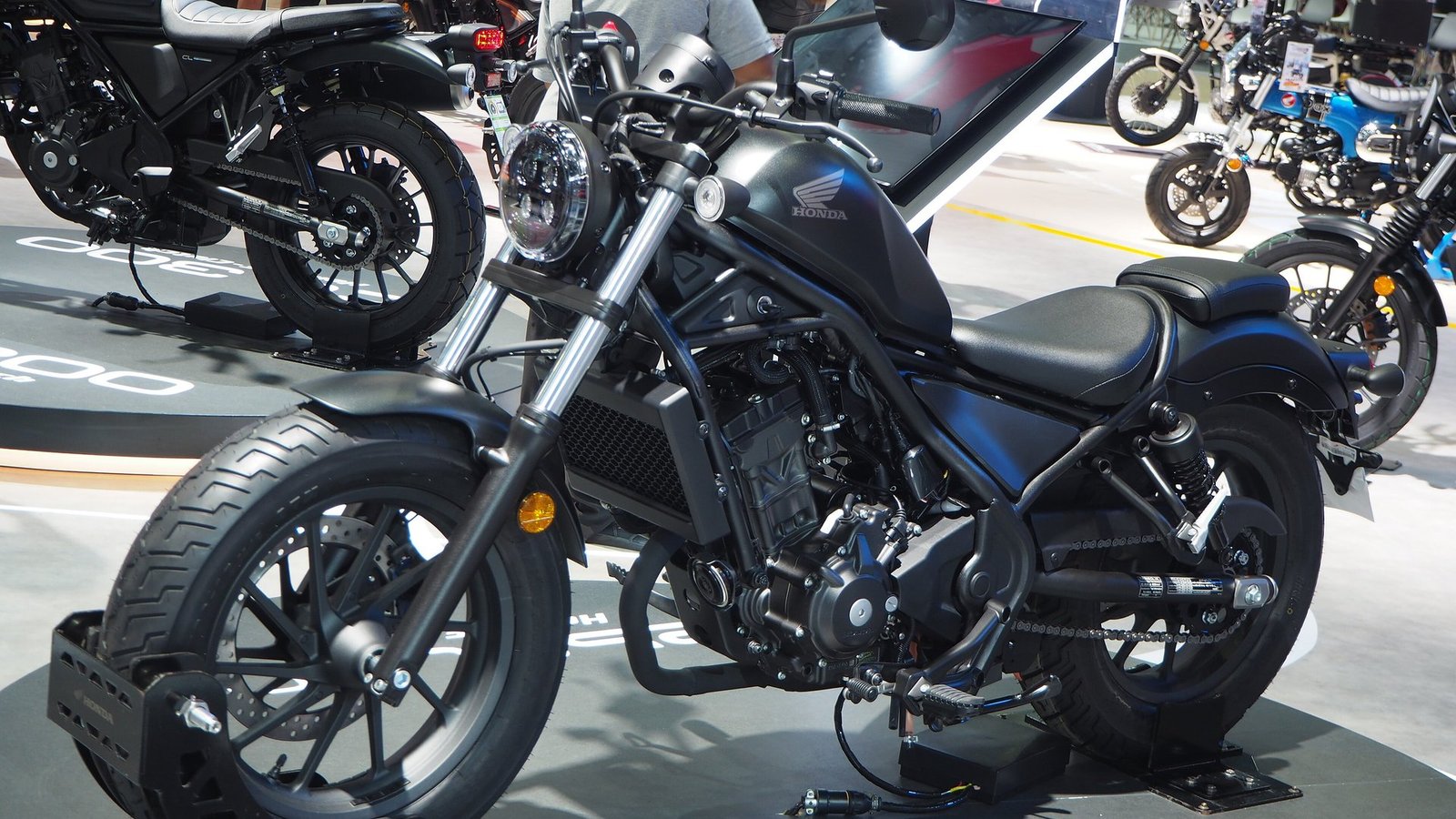
The Honda Rebel 300 vs 500 choice comes down to engine size and what you want from it. The Rebel 300 uses a 286cc single, while the Rebel 500 uses a 471 cc parallel twin. The 300 is the lighter, easier starting point. The 500 is the better pick if you want more power and don’t mind the extra weight and cost.
Honda Rebel 300 vs 500 at a Glance
Both bikes share a lot on paper. They have the same seat height, the same 3-gallon fuel tank, and similar cycle parts. The differences that matter show up in the engine and the weight.
| Spec | Rebel 300 | Rebel 500 |
|---|---|---|
| Engine | 286cc single-cylinder | 471 cc parallel twin |
| Curb weight | 364 lb | 408 lb |
| Seat height | 27.2 in | 27.2 in |
| Ground clearance | 5.9 in | 5.4 in (137.2 mm) |
| Fuel capacity | 3 gal | 3 gal |
| Transmission | Six-speed | 6-speed |
The spec table lists the fuel tank at 2.96 gal, which the text rounds to about three gallons. In practice, the fuel capacity is the same on both bikes, so it won’t decide your choice.
The seat height is identical at 27.2 in. That means your reach to the ground at a stop won’t change when you move from one model to the other. The 300 has more ground clearance, at 5.9 in, which Honda ties to sportier lean angles. The 500 sits at 5.4 in (137.2 mm).
Engine: 286cc Single vs. 471cc Parallel Twin
The Rebel 300 runs a liquid-cooled, DOHC single-cylinder engine. That gives you one cylinder to manage, which keeps the bike simple and light.
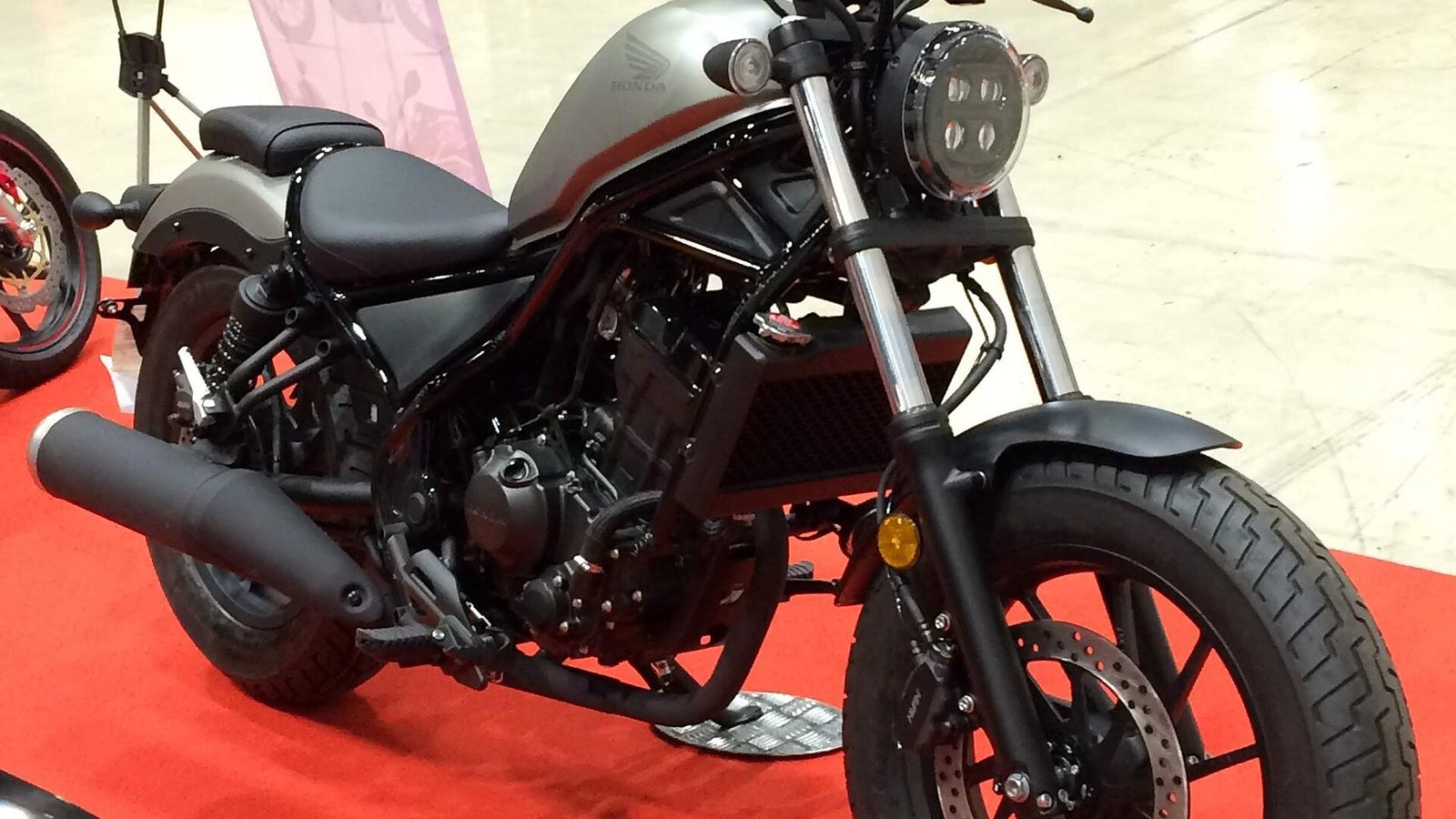
The Rebel 500 uses a liquid-cooled, 4-stroke, DOHC parallel twin. It has 8 valves and 471 cc. Honda rates it at 34 kW (46 hp) at 8,500 rpm and 43.2 N⋅m (32 lb⋅ft) of torque at 6,000 rpm. Fuel injection is standard on the 500.
Those figures explain the power gap. Honda says the 500 delivers significantly more power than the 300. A reviewer also described the 500 as feeling like the 300 with more power. If you want a bike that accelerates harder, the 500 gives you that headroom.
Both bikes have six gears, and both have an assist or slipper clutch. The Rebel 500 has one, and so does the Rebel 300, which reduces effort in stop-and-go riding. For 2020, the clutch cut clutch-lever effort by 30% on both models. If you spend a lot of time in traffic, that feature helps either way.
Weight & Ergonomics: How Each Bike Feels at a Stop and on the Road
The weight gap is the biggest physical difference between these two. The Rebel 300 weighs 364 lb with full fuel. The Rebel 500 weighs 408 lb. Those numbers are the curb weights Honda lists for the non-ABS versions.
ABS adds to both bikes. The ABS Rebel 300 is listed at 370 lb, and the ABS Rebel 500 at 414 lb. Honda says ABS adds about six pounds to each bike. The non-ABS 300 is the lightest bike in the range.
A lighter bike is easier to walk backward, balance at a stop, and hold upright at low speed. If you are still learning those skills, the 300 gives you less weight to manage. The 500 is heavier but still a manageable size for many riders.
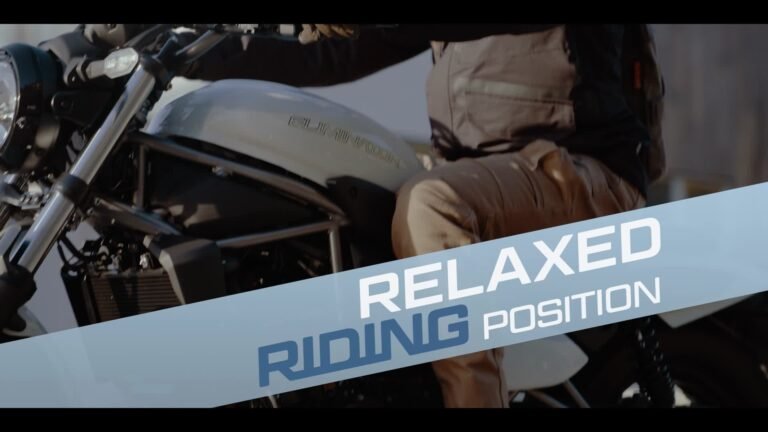
Both bikes share the same relaxed, neutral riding position. Honda describes the 500 with arms gently outstretched and feet dropping straight to the mid-mounted pegs. The 300 gets the same description. A reviewer found the seat low but not overly low, with the footpegs in a neutral mid position.
On the road, the difference is smaller than the spec sheet suggests. One reviewer said the 300 feels noticeably lighter than the 500. The same reviewer called the gap negligible on the road and said the 300 is more than satisfactory. You will notice the weight most at low speeds.
Features: Suspension, Brakes, Wheels and Controls
Both bikes use a 41mm telescopic fork with 4.77 in of travel. The rear uses twin shocks with 3.77 in of travel. On the Rebel 500, the shocks are side-mounted with two-step preload adjusters. The Rebel 300 has the same shock setup.
The front fork on the Rebel 500 ABS has no adjustable preload or rebound damping. If you want to tune the front end, you won’t find that adjustment here. One reviewer described the ride as typical cruiser, bouncy but tolerable, and maybe a little soft for some riders.
Braking is handled by a single 296mm front disc with hydraulic calipers and a single 240mm rear disc. Both bikes use hydraulic disc brakes. ABS is available on the ABS versions, and it is standard on the 2026 Rebel 500.
Both bikes roll on 16-inch wheels. The Rebel 500 uses 16-inch cast-aluminum wheels with Dunlop tires sized 130/90-16 front and 150/80-16 rear. The 300 uses the same tire sizes.
The 500 has an LCD meter that shows gear position and fuel consumption. The 300 has a similar LCD meter, updated for 2025 to reduce reflection. Both bikes have a small all-digital pod that is hard to read in bright sunshine. If you ride in strong sun, check the display in person before you buy.
Both bikes use LED headlights, turn signals and taillights. The 500 has them, and so does the 300. A reviewer described the ergonomics as more sport-like than cruiser, with a straight-up seating position and a slight forward lean to the bars.
Price: What Each Rebel Costs
The Rebel 500 costs more. For 2020, the US price of the ABS Rebel 300 was $4,799, and the ABS Rebel 500 was $6,499. The 500 costs $1600 more than the 300.
For the current model, the 2025 Rebel 500 ABS SE has an MSRP of $6,999. ABS is standard on the Rebel 500 for 2026. The SE trim also comes with ABS, the same as the standard version. The Rebel 500 is offered as standard, ABS, and ABS SE.
Early pricing looked different. The tentative price for the Rebel 500 was $5,999, and for the Rebel 300 it was $4,399. Early announcements did not set ABS pricing for either model. Use the model-year MSRP on the dealer’s window sticker as your current number.
If you are deciding between the base and SE trims, read Honda Rebel 500 vs SE: Which Should You Buy? for the trim differences.
Which Honda Rebel 300 vs 500 Should You Choose? (and Who Should Skip Each)
Honda aims the Rebel line at new riders, including younger riders and older riders returning to the sport. Honda describes the Rebel 300 as suited to new riders. It is the smaller and lighter of the two, so it’s the easier starting point.
The Rebel 500 fits riders stepping up from smaller bikes. Honda also says it suits experienced riders who want an affordable machine for getting around town. Honda calls it the bigger sibling of the Rebel 300. If you already know you want more power, the 500 is built for that step.
Skip the Rebel 300 if you want more power. Honda’s own description of the 500 as the thrill-seeking option makes that clear. Skip the 500 if you are watching your budget or want the lightest bike possible, since it costs more and weighs more.
Both bikes appeal to riders who care about style. Honda says the Rebel models are for new riders who want a fun ride without giving up style. The iconic peanut-shaped tank is on both.
Keep Reading on Gear & Road
- 2018 Honda Rebel 500: 471cc Twin, 408 lb, Worth Buying?
- Honda CB500F Specs, Price & Who It's For
- Honda Africa Twin: Specs, Price & Who It's For
- How Much Does the Honda Grom Cost? 2025 Prices
- Honda Grom Clones: What They Are and How They Compare
FAQ
Is the Honda Rebel 300 or 500 better for a beginner rider?
For most beginners, the Rebel 300 is the easier choice. It weighs 364 lb and uses a single-cylinder engine. The 500 suits beginners who want more power and plan to move up quickly.
How much does the Honda Rebel 500 cost, and is ABS standard?
The 2025 Rebel 500 ABS SE has an MSRP of $6,999. ABS is standard on the Rebel 500 for 2026. The ABS adds about six pounds to the bike.
Can you add a passenger seat or accessories to the Rebel 300 and 500?
In stock trim, both bikes come with only a solo saddle. Passenger footpegs are sold as accessories. Honda lists optional accessories including a rear carrier, saddlebags, a windscreen, a 12-volt accessory socket, a passenger seat and footpegs. The rear fender and subframe are removable for a custom look and can be returned to stock form.
Bottom Line
The Honda Rebel 300 vs 500 decision is about power against weight and cost. Choose the 300 if you are new, want the lighter bike, or want to keep the price down. Choose the 500 if you want more power and don’t mind the extra weight. A reviewer found the difference negligible on the road, so test ride both if you can.
Remember that ABS is standard on the 500 for 2026.
Sources
- 2025 Honda Rebel® 500 Base
- Honda CMX500 Rebel – Wikipedia
- 2026 Honda Rebel 500 Features & Benefits
- 2026 Honda Rebel® 500 SE
- 2024 Honda Rebel® 500 ABS SE
- 2025 Honda Rebel® 500 ABS SE
- 2022 Honda Rebel® 500
- 2023 Honda Rebel® 500 ABS SE
- 2025 Honda Rebel 500 Features & Benefits
- 2025 Honda Rebel 300 Features & Benefits
- Styling, comfort and performance enhancements to Rebel 500 and Rebel 300 for 2020
- World Debut Of 2017 Honda Rebel 500 And Rebel 300
- 2017 Honda Rebel 300 and Rebel 500: FIRST TEST
- 2017 Honda Rebel 500 and 300 First Ride Review | 13 Fast Facts
- 2024 Honda Rebel® 500 ABS