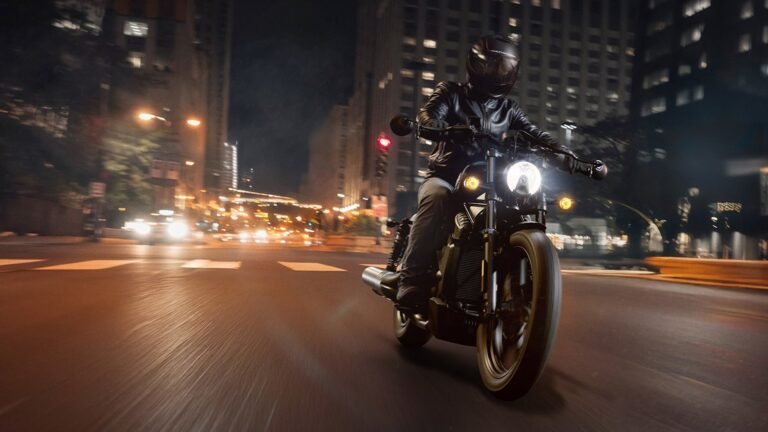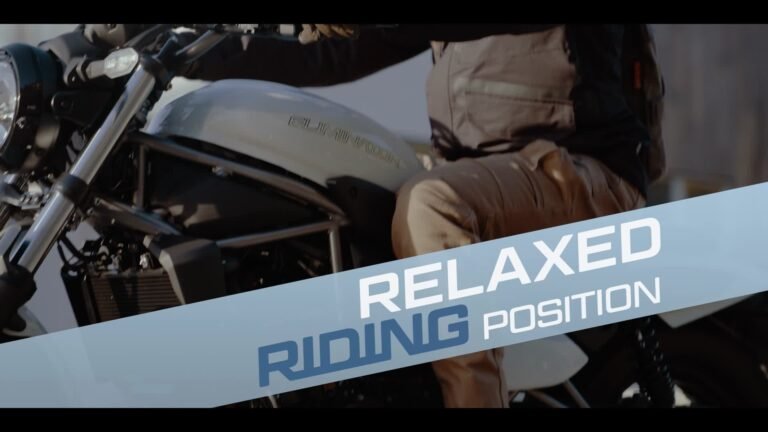
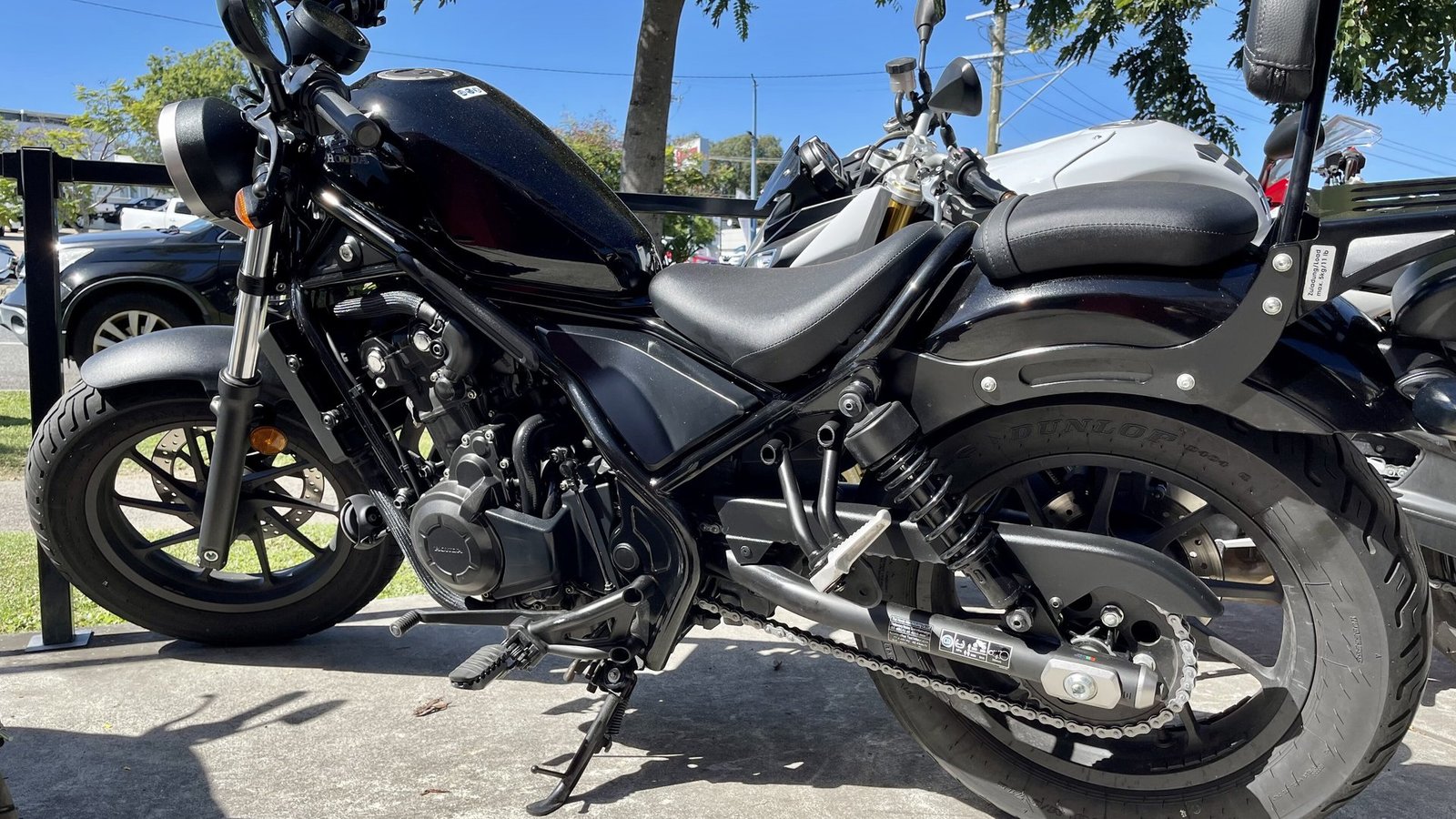
If you are weighing honda rebel 500 vs se, the short answer is that the mechanical package is nearly identical, so the decision mostly comes down to styling, equipment, and price. Both versions use a 471 cc (28.7 cu in) liquid-cooled parallel twin, a 6-speed manual transmission, and fuel injection. The SE adds a brown diamond-stitch seat, black fork boots, and a color-matched headlight cowl.
The design intent behind the family explains much of this. Honda built the Rebel around modification and customization, with minimalism at its core, aiming for a bike that is straightforward and practical while adaptable to the owner’s needs.
Honda Rebel 500 vs SE at a Glance
The table below compares the two versions using the listed figures. Where a figure comes from a specific model year, the year appears in the cell.
| Spec | Rebel 500 (standard) | Rebel 500 SE (2026) |
|---|---|---|
| Engine | 471 cc liquid-cooled parallel twin | 471 cc liquid-cooled parallel twin |
| Transmission | 6-speed manual, chain final drive | 6-speed manual, chain final drive |
| Fuel system | Fuel injected | Fuel injected, 34 mm injector |
| Wet weight | Listed at 408 lb (185 kg) | 419 lb (190 kg) |
| Brakes | Single hydraulic discs, ABS standard | Single hydraulic discs, ABS |
| Fuel tank | 3.0 gal, peanut-shaped | 3 gal (11.2 l) |
Honda lists ABS as standard on the Rebel 500 for 2026, and the SE comes with ABS as well. The SE lists a higher wet weight than the standard figure, so the two versions are not identical on paper. Look at the other specs in the sections below before deciding.
Engine and Performance: Essentially Identical
Both versions share the same basic engine. The Rebel 500 uses a 471 cc liquid-cooled 4-stroke 8-valve DOHC straight-twin, which matches the eight-valve, parallel-twin description used elsewhere.
The claimed power figure is 34 kW (46 hp) at 8,500 rpm. The claimed torque figure is 43.2 N⋅m (32 lb⋅ft) at 6,000 rpm. These are manufacturer claims, so treat them as a reference point rather than measured results.
Nothing in the listed specs suggests the SE carries a different engine. The 2026 SE uses a 6-speed manual with chain final drive and fuel injection with a 34 mm injector. The 2025 ABS SE also uses fuel injection rather than a carburetor.
For you, the practical takeaway is that you get the same gearbox, drive system, and fuel setup either way. Your maintenance routine for the chain and tires will look the same on both bikes. That makes the engine a non-factor in most buying decisions.
Weight, Suspension, and Ergonomics
The standard bike lists a wet weight of 408 lb (185 kg). Another listing, labeled as claimed, gives 421 lb (191 kg), which shows that published weights vary by source and model year. The 2026 SE lists 419 lb (190 kg).
Wheelbase on the 2026 SE is 58.7 in (1491 mm). Ground clearance is 5.4 in (137.2 mm), and the 2026 SE lists the same figure. For a bike of this size, those numbers suggest a relatively low, compact layout that is easy to manage at a stop.
Seat height is listed at 27 in (690 mm). A separate listing gives 27.2 in. If you are a shorter rider, check the figure against your inseam and sit on the bike before you buy.
The front suspension on both versions is a 41 mm telescopic fork. Front wheel travel is listed at 5.5 in, although a 2022 listing shows 4.8 in (121.9 mm) of travel with no adjustability. The SE’s fork has no adjustable preload or rebound damping.
The rear uses a twin-sided swing arm with two shock absorbers and adjustable preload. The SE’s swing arm also has adjustable shock and spring preload, and the ABS SE rear preload is adjustable. Rear wheel travel is listed at 3.7 in, while a 2022 listing gives 3.8 in (96.5 mm).
Tires are 130/90-16 front and 150/80-16 rear. They are Dunlop tires mounted on 16-inch cast-aluminum wheels. Those are common sizes, which makes tire selection simple when it is time to replace them.
Features: What the SE Adds
The SE’s main visible additions are the brown diamond-stitch seat, black fork boots, and color-matched headlight cowl. These change the look of the bike but not the core hardware. The base bike keeps the same basic layout with fewer styling extras.
Both versions include an LCD meter with a gear-position indicator and a fuel consumption display. The lighting is LED for the headlight, turn signals, and taillight. Honda describes the bike as aimed at new riders, those stepping up from smaller bikes, and experienced riders seeking an affordable machine for getting around town.
The tank is a peanut-shaped unit that holds 3.0 gal. The 2026 SE lists 3 gal (11.2 l) with a fuel reserve of 0.6 gal (2.3 l). The reserve figure matters on longer days, because you should know where your reserve sits before you run low.
Brake hardware uses single hydraulic discs, and the front and rear rotors are 296 mm and 240 mm, with ABS on both versions. The 2020 model year added an LED lighting package, a revised instrument cluster, and a slipper-assist clutch. Those updates have carried forward in the newer models, so the current bikes reflect that refresh.
Price: What the SE Costs Compared to the Standard Bike
The 2025 Rebel 500 ABS SE has a listed MSRP of $6,999. The model name itself marks it as the ABS version of the bike. Those names are the clearest signal that ABS is part of the SE package.
The source material for this comparison does not include a current MSRP for the standard Rebel 500, so I cannot give you a verified dollar gap between the two. Check Honda’s current pricing or a local dealer for the 2026 standard model before you decide. Compare the total price against the cosmetic extras you would actually use.
Fuel economy is a useful cost check. The 2022 standard Rebel 500 has a combined rating of 67 US mpg and a 3 gal (11.2 L) tank. Those are older figures, so they do not describe the 2026 SE, but they give you a baseline for running costs. If you shop across budget motorcycles, our roundup of budget motorcycles puts the Rebel in a wider context.
Which Honda Rebel 500 Fits Your Riding
If you want the lowest-cost path into the Rebel line, the standard bike is the place to start. It has the same engine, drivetrain, and frame-level layout as the SE. ABS is standard on the 2026 model, so you do not give up that safety feature by choosing the base version.
If the SE’s seat, fork boots, and headlight cowl appeal to you, the SE is the better choice. It is the version Honda names as the ABS SE, and it comes with ABS like the standard model. Pay attention to whether the styling extras are worth the price to you, because the mechanicals are close.
If you plan to tune the suspension, the SE’s rear shock preload is adjustable, while the front fork offers no adjustable preload or rebound damping. Honda designed the Rebel to be adapted to different uses, so think about whether you want to customize the bike later. For a new rider, the bike is aimed at newcomers and those stepping up from smaller machines.
For a different approach, the Kawasaki Ninja 500 profile covers another entry-level option, and the Yamaha MT-07 first-bike guide shows how a naked bike compares.
Keep Reading on Gear & Road
- Honda CB500F Specs, Price & Who It's For
- Honda Africa Twin: Specs, Price & Who It's For
- Honda Grom Maintenance Intervals: Service Schedule Guide
- How Much Does the Honda Grom Cost? 2025 Prices
- Honda Grom Clones: What They Are and How They Compare
Frequently Asked Questions About the Honda Rebel 500 and SE
Is the Honda Rebel 500 SE faster or more powerful than the standard Rebel 500?
No. The listed engine is the same 471 cc parallel twin across the family, with claimed power of 46 hp at 8,500 rpm and claimed torque of 32 lb⋅ft at 6,000 rpm. The SE’s difference is mostly visual and equipment-related.
Does the Honda Rebel 500 come with ABS, and does the SE have it too?
Yes on both counts. ABS is listed as standard on the Rebel 500 for 2026, and the SE comes with ABS like the standard version. Single hydraulic discs with 296 mm front and 240 mm rear rotors are used on both.
Is the Honda Rebel 500 SE worth the extra money over the standard model?
That depends on what you value. The SE has a listed MSRP of $6,999 for the 2025 ABS SE, and it adds the brown diamond-stitch seat, black fork boots, and color-matched headlight cowl. The SE also has adjustable rear shock preload, but a 2023 listing notes that rear rebound damping is not adjustable. If you do not want the cosmetic extras, the standard bike covers the same basic mechanicals.
What is the seat height of the Honda Rebel 500 and SE, and is it good for shorter riders?
Seat height is listed at 27 in (690 mm), and another listing gives 27.2 in. Those figures are close, but the difference is small enough that you should sit on both bikes if height is a concern. Check how the seat feels with your feet flat or slightly on the balls of your feet before you commit.
Bottom Line
The honda rebel 500 vs se choice is less about performance and more about equipment, looks, and budget. Both bikes share the same engine, transmission, and ABS setup, so you are not choosing between different machines. If the SE’s extras matter to you, it is the better fit, and if they do not, the standard bike covers the basics. Check current pricing for the standard model before you decide, and sit on the bike to confirm the seat height works for you.