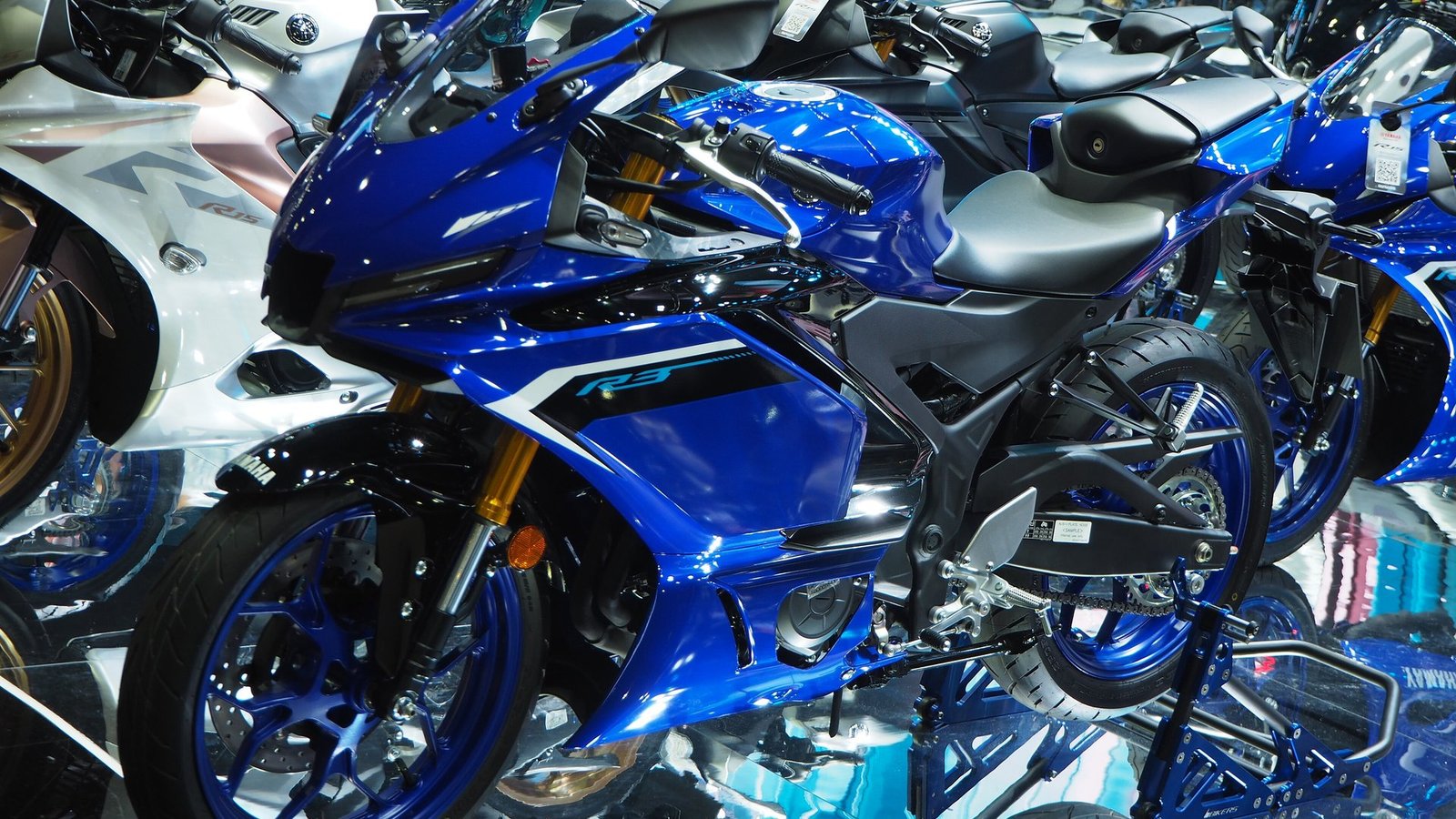
The Yamaha YZF-R3 is a 321 cc sport bike for riders who want a light, lower-cost route into sport riding. For 2026 the US MSRP is $5,499, plus a $650 destination charge. It suits beginners and riders who mostly commute or ride local roads, and it skips the electronic aids that some riders expect.
Yamaha YZF-R3 Overview
Yamaha describes the YZF-R3 as the perfect entry into its R-series, with a twin-cylinder engine and an ultra-light chassis. Promotional wording like that tells you less than the numbers do. The numbers show a small, simple bike built for low-speed confidence and lower running costs.
Yamaha says the bike suits everything from tight city streets to wide-open racetracks. The page also describes it as versatile for track days, commuting, and canyon riding. Those are broad claims, so the spec sheet and rider feedback below are where you should focus.
The bike is described as an entry-level sport motorcycle. One reviewer calls it an excellent basis for riders starting their sport bike journey. Another review describes it as meant to draw new riders into the family.
Engine & Performance
The 2026 engine is a 321 cc liquid-cooled, 4-stroke, DOHC inline twin with four valves per cylinder. Yamaha calls it a high-revving engine. The bore and stroke are 68.0 mm by 44.1 mm, and the compression ratio is 11.2:1.
Yamaha’s other description calls the engine a counterbalanced parallel twin. For a two-cylinder engine, the parallel and inline labels both describe cylinders set in one row. The engine uses downdraft fuel injection and sends power through a six-speed gearbox. The spec sheet lists double overhead cams and four valves per cylinder.
Yamaha claims 42 hp at 10,750 rpm and 21.8 lb-ft of torque at 9,000 rpm. A rear-wheel measurement gave 36.7 hp at 10,750 rpm and 19.8 lb-ft at 9,100 rpm. Cycle World’s dyno measured 36 hp at 10,700 rpm and 19.8 lb-ft at 9,000 rpm.
Those figures are close, but they come from different tests. The practical meaning is simple. The power peaks high in the rev range, so you will spend more time near the top of the tachometer to make full use of it.
The tank holds 3.7 US gallons (14.0 L). Yamaha lists an estimated 56 mpg. Published tests report fuel consumption of 56 to 48 mpg-US, so your actual result depends on how hard you ride.
Chassis & Ergonomics
Yamaha lists the 2026 wet weight at 373 lb (169.2 kg), counting all standard equipment, fluids, and a full tank. That is the number to compare with other bikes. Yamaha’s spec sheet lists the seat height at 30.7 in. Cycle World says low seat heights help draw new riders into this class.
The wheelbase is a compact 54.3 in. Yamaha says the handlebars rise a bit from the triple clamp for comfort. That gives you a more upright reach for everyday riding, which matters more on commutes than on track days.
The front has an inverted telescopic fork with 5.1 in of travel. The rear uses a Monocross single shock with adjustable preload and 4.9 in of travel. Adjusting preload lets you set the rear for your weight and the load you carry.
The brakes are a 298 mm hydraulic front disc with ABS and a 220 mm hydraulic rear disc with ABS. The 2026 tires are a 110/70-17 Dunlop Sportmax GPR-300F up front and a 140/70-17 Dunlop Sportmax GPR-300R at the rear. The original equipment tires are Dunlop Sportmax GPR-300 radials.
The bodywork is inspired by Yamaha’s YZR-M1 MotoGP race bike. It includes an aggressive front fairing, sleek side panels, and a tail section with an R-series tail wing. That styling is about looks. It does not change the listed chassis numbers.
Features
The clutch is an Assist & Slipper unit. It inhibits excessive engine braking during downshifts and reduces clutch lever force. Yamaha says the 2025 model received a slipper clutch. The 2019 model lacked one, which Cycle World said hindered its potential.
The lighting uses LEDs throughout. The 2026 bike has a single projector-type headlight with four-element position lights. The taillight and headlight both use LED elements, and the tail lights and turn signals are LED as well.
The LCD instrument cluster displays connected smartphone information and vital vehicle data. The multi-function meter shows gear position, fuel capacity, real-time and average fuel economy, water temperature, clock, and an oil change trip meter. A programmable shift light is included in the LCD dash.
Connectivity runs through Yamaha Motorcycle Connect (Y-Connect), a free app for iOS and Android. A USB-A socket next to the display powers a phone or heated gear. The bike has no engine mapping, traction control, or quickshifter.
Price & Trims
The 2026 Yamaha YZF R3 has a US MSRP of $5,499. The standard model carries a $650 destination charge on top of that price. The 2025, 2024, and 2023 models were all listed at the same $5,499 MSRP.
The 2026 model comes with a 12-month limited warranty. ABS is listed on both brakes in the 2026 spec. Yamaha first offered ABS as an option starting in 2017, so check the specific bike you are looking at.
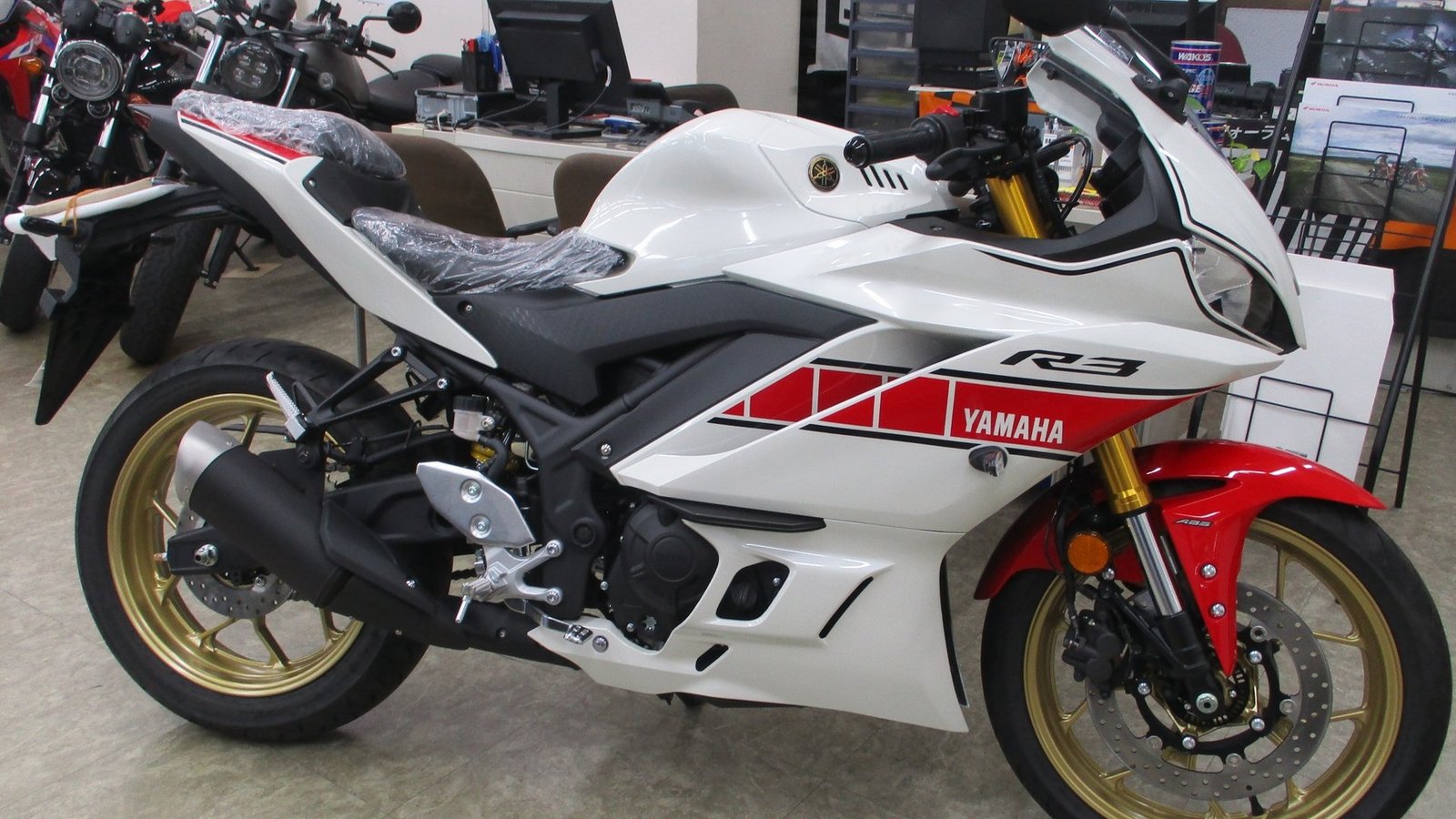
A 2026 70th Anniversary Edition is also offered. It has throwback white and red speed block livery, gold Yamaha Tuning Fork emblems, and an Anniversary Edition badge. The changes listed for it are visual. No separate price for it appears in the facts used here.
Yamaha’s spec table does not show an MSRP for the R3 itself. Use the model listings and the destination charge to estimate what you will pay out the door.
How It Compares
The page names the Kawasaki Ninja 300, Honda CBR300R, and KTM 390 as rivals in the same range. The facts available here include spec figures for the Honda and KTM from a shootout. They do not include figures for the Ninja 300, so it is not in the table.
| Spec | Yamaha YZF-R3 | Honda CBR300R | KTM RC390 |
|---|---|---|---|
| Seat height | 30.7 in | 30.7 in | — |
| Wet weight | 373 lb | 356 lb | 364 lb |
| Power | 42 hp, Yamaha claim | 26.3 hp | 39.7 hp |
| Fuel tank | 3.7 gal | — | 2.6 gal |
| Standard ABS | Listed on both brakes | — | Standard |
| US price | $5,499, 2026 | — | $5,499 |
A dash means the facts used here do not give that figure. The Honda and KTM numbers come from a shootout with its own test method, so treat the table as a rough guide.
The shootout’s cost table listed no ABS option for the Yamaha. That matches an older listing, not the 2026 spec, so check the current model before you buy. The Honda was the lightest bike in that test. The KTM was second lightest and held the least fuel.
Fuel economy in the shootout varied. The KTM routinely got over 50 mpg at calmer speeds, with a best of 56.3 mpg and a worst of 44 mpg. All four bikes in that test used the same Pirelli Diablo Rosso II tires. If you want a different beginner-friendly option, read the Yamaha MT-07 First Bike? Who It Suits and What to Know guide.
Who It’s For (and Who Should Skip It)
The YZF-R3 suits riders who want a low, light, inexpensive sport bike for city and local riding. Yamaha says it works for beginners through track day riders. In practice, most buyers use it mostly for commuting and local trips. The 56 mpg figure makes it a practical daily commuter.
Skip it if you want electronic rider aids. The YZF-R3 has no traction control, engine mapping, or quickshifter. Also skip it if you want the lightest bike in its class. The Honda was lighter in the shootout, and the 2026 Yamaha lists 373 lb wet.
Skip it if you expect the 2019 bike’s clutch. That model lacked a slipper clutch, but the current model has an Assist & Slipper unit. The difference matters most for riders who downshift hard on track or in fast corners.
If you want a second option with more street-oriented sizing, check the Kawasaki Ninja 500: Specs, Strengths, and Who It Suits profile.
Keep Reading on Gear & Road
FAQ
Is the Yamaha YZF-R3 good for a beginner?
For many beginners, yes, with clear limits. Yamaha calls it an entry-level sport motorcycle, and the seat height is 30.7 in. Skip it if you want electronic aids, because it has no traction control.
How much does the 2026 Yamaha YZF-R3 cost in the US?
The 2026 US MSRP is $5,499. The standard model carries a $650 destination charge on top of that. The bike comes with a 12-month limited warranty.
Does the YZF-R3 have ABS, traction control, or a quickshifter?
It has ABS, listed on both the front and rear brakes. It does not have traction control, engine mapping, or a quickshifter.
How much power does the YZF-R3 make?
Yamaha claims 42 hp at 10,750 rpm. A rear-wheel measurement gave 36.7 hp at the same rpm. Those numbers come from different tests, so compare them with that in mind.
Bottom Line
The Yamaha YZF-R3 is a simple, light sport bike with a practical seat height and a clear price. It works well for beginners who want a sport-styled bike for everyday riding. It is a poor fit for riders who want electronic aids or the most power in their class. Check the current model and its ABS and clutch specs before you buy.
Sources
- 2026 YZF-R3 – Specifications | Yamaha Motorsports USA
- 2026 YZF-R3 | Yamaha Motorsports USA
- 2025 YZF-R3 | Yamaha Motorsports USA
- 2025 YZF-R3 – Specifications | Yamaha Motorsports USA
- 2024 YZF-R3 – Key Features | Yamaha Motorsports USA
- 2026 Yamaha YZF R3
- Yamaha Motorcycle Reviews, Prices and Specs
- Balance of Power | Cycle World | Issue 2 2019
- Beginner-ish Sportbike Shootout + Video
- 2019 Yamaha YZF-R3 Review (17 Fast Facts)
- 2019 Yamaha YZF-R3 Review