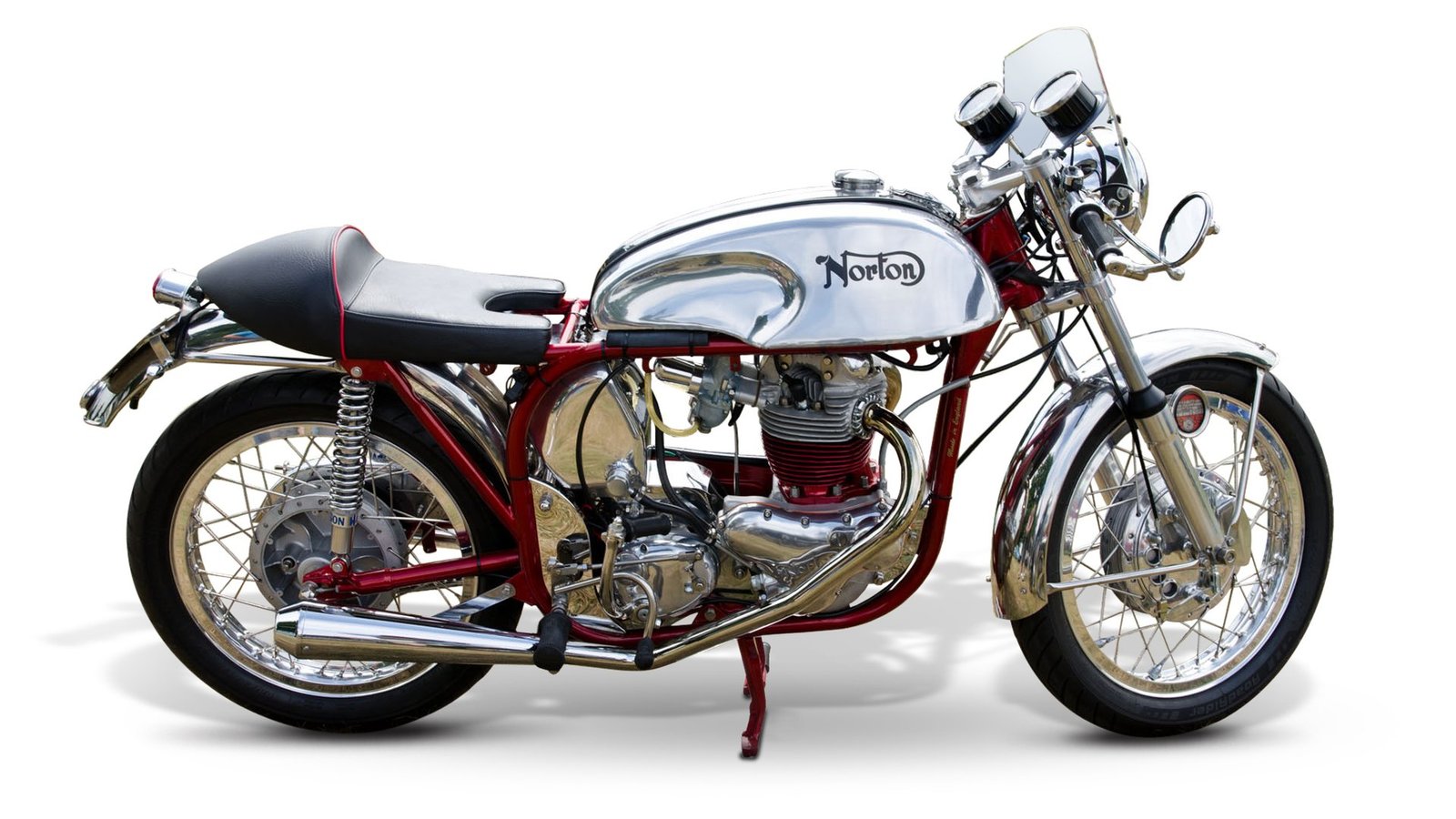
Café racer motorcycles began as a street scene in postwar Britain, long before factories built them. Car ownership was still low, and by the late 1950s young people could for the first time afford a motorcycle. Riders stripped their bikes, tuned the engines and fitted low bars to go faster. That look still shows up in showrooms today.
Here is where the style came from, what defines it, and why the name still gets used.
Context: Postwar Britain and the Rise of the Café Racer
The style grew out of a specific time and place. Postwar Britain had rationing and austerity, and those pressures eased by the late 1950s. As they did, motorcycles became more affordable for young riders, who began modifying their own machines.
The exact starting point is disputed. Café racers purportedly originated among British enthusiasts in London in the early 1960s, but the origin story is described as highly dubious. Treat any single date or place as a rough guide, not a fact you can cite as settled.
Some things are consistent. A café racer was typically an air-cooled parallel twin with low-mounted handlebars and rear-seat footrests. Riders also made the bike lighter and tuned the engine, adding clip-ons or dropped handlebars and rear-set footrests.
Notice what the builders started with. Riders did not buy a special machine; they rode everyday bikes and changed them. That habit of modifying stock bikes is the core of the whole style.
What Defines a Café Racer Motorcycle
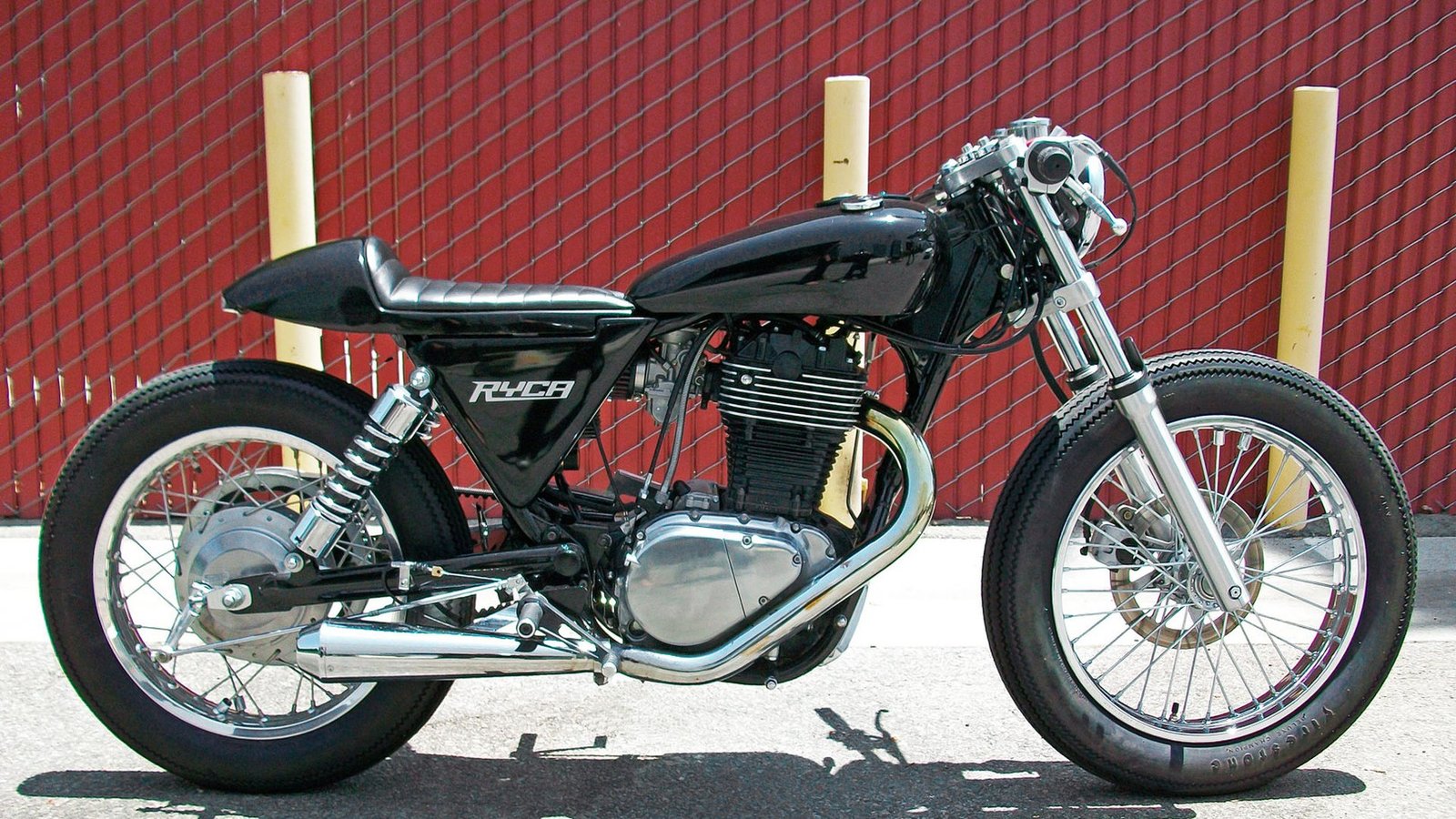
Enthusiasts disagree about the exact definition. A purist describes a 1960s British single- or twin-cylinder motorcycle that was stripped and tuned for performance. Non-purists take a looser view, focusing on the look rather than the origin.
The table below lists the features most often associated with the style.
| Feature | Typical café racer build | Source |
|---|---|---|
| Era and origin | 1960s British single or twin, stripped and tuned | |
| Handlebars | Clip-ons or clubman bars | |
| Foot controls | Rear-set footrests and sporty controls | |
| Bodywork | Minimal, with side panels and chain enclosures removed | |
| Seat | Flat-slab solo seat | |
| Headlight | A single round headlight | |
| Wheels | Spoke wheels | |
| Exhaust | Swept-back pipes and reverse cone megaphone mufflers | |
| Tires | TT100 Dunlop tires |
Non-essential parts were replaced with lighter components or removed entirely. Some builders also fitted larger carburetors and swapped the dual seat for a solo saddle. The result was a bike with less weight and less protection from the weather.
Riders also used the same modifications over and over. They swapped stock bars for clip-ons or clubmans, fitted rear-set foot controls and added Dunstall pipes.
Two related styles are often confused with café racers. A street tracker has a sporty race feel, but its higher handlebar and less aggressive foot controls leave you more upright. A brat bike is essentially a café racer with a slab-style seat that fits two riders. If you carry a passenger, the brat style is the one to look at.
The Ace Café and the Rockers of 1960s London
The Ace Café was a 24-hour transport café that opened in 1938. It hosted motorcycle riders from 1950 until it closed in 1969. Multiple bikes were often parked outside it, along with the Busy Bee, another London cafe.
The riders who gathered there became known as Rockers. The press coined that label in 1964. By 1960, Rockers were using modified motorcycles to race on England’s highway system, moving from cafe to cafe.
Their bikes were ordinary. Rockers rode everyday machines from Triumph, BSA, Ariel, Matchless, AJS and Norton. Gold Stars and Vincents cost too much for most riders, so they chose Triumph Twins, especially the 650. These bikes were cheap to tune, which made them the preferred base.
Social life also ran through the 59 Club, a Christian youth group for Rockers. The club began in 1959 when Reverend Bill Shergold invited Rockers to join. It was located in central London and was founded by Shergold, who rode a Bonneville.
Ton-Up Culture and the 100 mph Test
Biker lore holds that a key goal of the ton-up culture was reaching 100 mph (160 km/h). The “ton” was the 100-mph barrier, and riders tried to ride over it on suburban roads. Young riders called “ton-up boys” loved to reach that speed, even on bikes that were not really built for it.
In the 1960s, getting an older British twin past 100 mph was a real achievement and a rite of initiation. Rockers usually did the ton at night on busy London roads such as the North Circular Road, not on race courses. Riders raced from the Ace up the North Circular to a set of traffic lights, turned around and raced back.
The Ace also had a test beyond straight-line speed. The real test was riding the bends at the Iron Bridge, a mile away, while holding over 80 through them. The trip to Brighton covered 65 miles. Riders tucked low into dropped bars for that ride.
Braking was not a priority. Rockers generally did not bother much with brake modifications, and one rider reportedly said little could stop you from the ton. Treat that as the attitude of the era, not a model for riding today.
Triumph’s Bonneville and Thruxton Era
Triumph’s name for its café racer came from a record. Triumph set a land speed record of 214 mph in 1956, and the Bonneville name honors that run. Edward Turner designed the Bonneville T120 as his swansong for Triumph. The model arrived in 1958, and the first Bonneville rolled off the production line that year.
The “120” in the name was chosen to imply a top speed of 120 mph. Bonneville riders had a strong racing record, too. John Hartle won the Isle of Man TT on a Bonneville.
The Thruxton carried that reputation forward. The first Bonneville T120 Thruxton racer dominated motorsports from the late 1950s. The bike made its name after the first-ever Thruxton 500 series race win. An entire generation of teenage café racers in the 1960s chose it as their bike.
The table below shows key milestones from the era.
| Year | Milestone | Source |
|---|---|---|
| 1956 | Triumph set a land speed record at 214 mph | |
| 1958 | The first Bonneville came off the line | |
| Late 1950s | The Thruxton racer became a dominant force | |
| 1969 | The Bonneville T120 Thruxton became the first production motorcycle to average over 100 mph at the Isle of Man TT |
These milestones matter because they connect the Bonneville to real racing results, not just styling.
Factory Café Racers from the 1970s and Beyond
Through the 1960s, almost all café racers were British, from Norton, Triumph and BSA. That changed in the 1970s, when Japanese motorcycles took over the factory café segment. By 1977, several manufacturers were producing factory café racers.
In the latter half of the 1970s, BMW, Honda, Moto Guzzi and Harley-Davidson built factory café racer models. Moto Guzzi’s Le Mans was a well-received example. Major makers including BMW, Norton, Ducati and Yamaha responded to rider interest with ready-to-ride models.
Not all of these bikes delivered on the look and the performance. Most late-1970s factory models had café styling but no performance increase over standard versions. If you want the style, read the specs, not just the pictures.
A separate branch came from the street fighter, which appeared around the late 1970s and early 1980s and used small Japanese sport bikes. The Ducati SportClassic, made from 2006 to 2009, was another modern café racer. The café racer has seen a resurgence over the past two decades, mainly from manufacturers building factory models.
| Period | What changed | Source |
|---|---|---|
| 1960s | Almost exclusively British, from Norton, Triumph and BSA | |
| 1970s | Japanese motorcycles took over the factory segment | |
| Late 1970s | BMW, Honda, Moto Guzzi and Harley-Davidson built factory models | |
| Late 1970s to early 1980s | Street fighters built from small Japanese sport bikes | |
| 2006 to 2009 | Ducati SportClassic |
Legacy: How Café Racer Motorcycles Shaped Modern Bikes
The Rockers set a trend that is still with us, and they were arguably the world’s first sportbikers. Every low-bar, stripped-down, lightweight sporty motorcycle owes something to the Ace café-racer movement. That movement survives and flourishes more than half a century later.
Modern makers now build factory options from Honda, Kawasaki, Yamaha and Triumph. The list includes the Honda CB300R, CB650R and CB1000R, the Kawasaki W800, the Yamaha XSR700 and XSR900, and the Triumph Thruxton. Triumph also sells a turn-key retro bike in the Thruxton R.
The table below compares a few of these models using only the facts available.
| Model | Key point | Source |
|---|---|---|
| Triumph Thruxton and Thruxton R | 1200cc high-power performance | |
| Triumph Thruxton models | Chassis, brakes and suspension designed to match performance | |
| Royal Enfield Continental GT 650 | Styling as close to a factory café racer as a maker could build | |
| Norton Manx | Described as the closest thing to a legitimate factory café racer |
If you want high performance, the 1200cc Thruxton models are the option to check. Skip them if you want a smaller engine, and look at the Continental GT 650 instead. For budget-minded shoppers, see Best Motorcycles Under $8,000 in 2026 before you decide.
Did You Know
- More than 6,000 riders gathered outside the Ace Café at a reunion held one Sunday in September.
- The Ace re-opened in 1997 in part of a tire store as the “Ace Corner”.
- The Brighton Burn-Up crowd swelled to nearly 20,000 in 1996, which prompted a bigger venue.
- Wallace Wyss, an American automotive writer and advertising consultant, commented on the origin of the term café racer.
- Cecil Richards got a 650cc BSA Super Rocket accepted at the cafe after starting on a Triumph Tiger Cub.
- Ace regulars Dave Croxford and Ray Pickrell were factory riders for Norton and Triumph in the 1970s.
Bottom Line
The café racer began in postwar Britain, where young riders modified everyday bikes for speed and style. Its definition is debated, but the common elements are clip-ons, rear-set footrests, stripped bodywork and a solo seat. The Rockers helped start a trend that still influences sportbikes today. If you want the look, check the specs before you buy, because the style and the performance are not always the same.
The resurgence over the past two decades shows the style still has a market.